 Diamond Painting Tool
Special Diamond Painting Drills Explained
Special drills are accents, finishes, or shapes added to a diamond painting kit. They are not a universal quality grade. Read the bag label and canvas symbols first, because an AB finish, a Fairy Dust finish, a crystal piece, and a shaped accent can look similar in a photograph but fit and handle differently.
Special drills are accents, finishes, or shapes
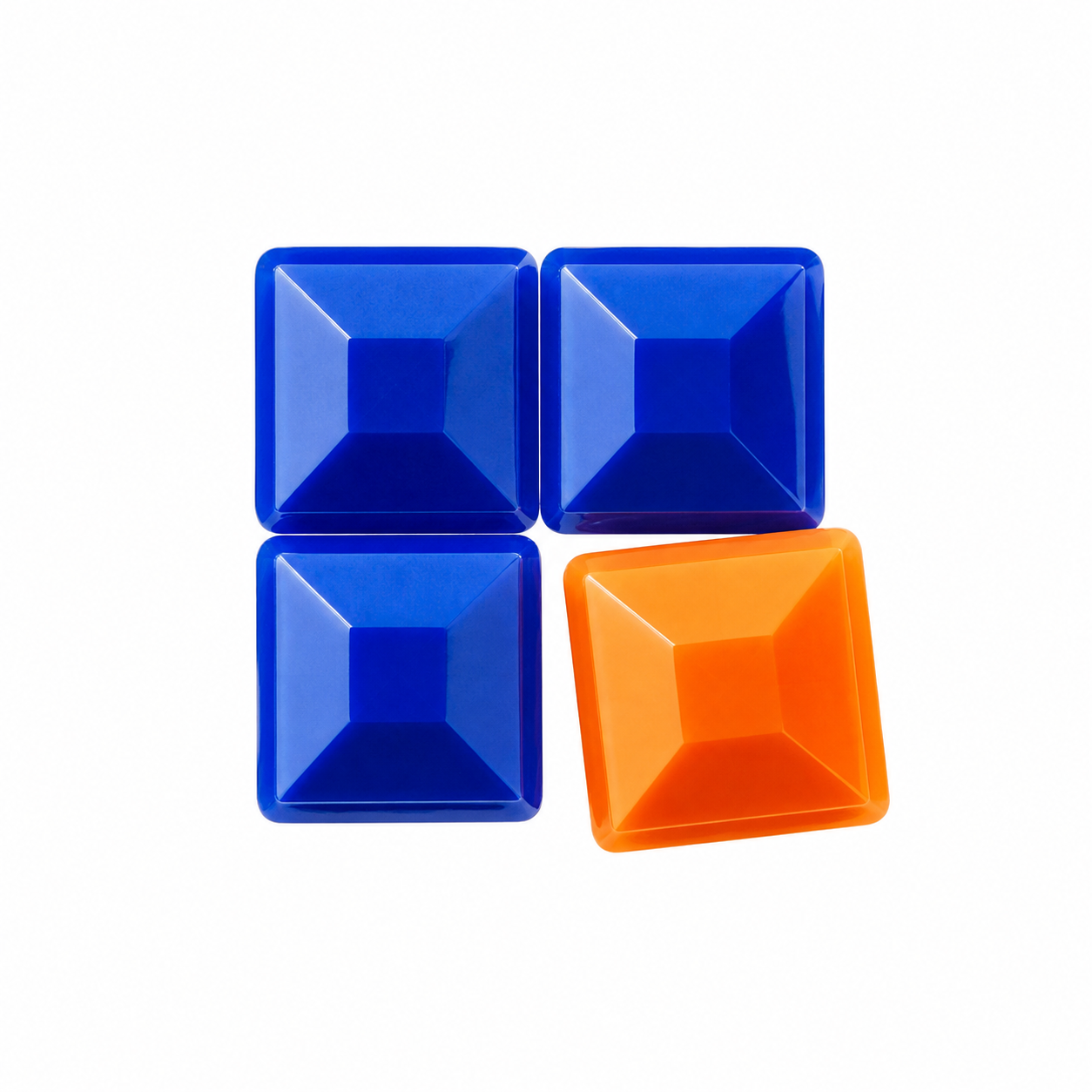
Standard drills are normally round or square resin pieces. Special drills may change the surface finish, the material description, or the outline. They often appear in focal highlights rather than across a full canvas. That is why they deserve their own labelled storage pot: replacing one with a standard drill can flatten the intended contrast even when the base colour looks close.
Use the standard round and square drills guide for the basic shape choice. This page is about the exceptions a kit may include alongside them.
AB, Fairy Dust, crystal, and glow drills
| Kit-specific label | Visible effect often sold under that name | Fit check | Do not substitute with |
|---|---|---|---|
| AB | An iridescent surface treatment that can shift the visible base colour | Match the round or square shape, height, and printed symbol | A standard drill chosen only by base-colour code |
| Fairy Dust or FD | A fine glitter-like finish in seller terminology | Compare the surface and height with another FD drill from the same kit | An AB drill merely because both reflect more light |
| Crystal | A translucent, coloured, or strongly faceted accent, depending on the seller | Check the outline, flat back, height, and adhesive contact | An opaque standard drill without comparing the design effect |
| Glow | A drill sold for a low-light effect | Use the exact kit symbol and supplier instructions | A pale standard drill that only looks similar in daylight |
| Metal-look, metallic, or chrome | A reflective finish named by the individual seller | Check for a matching coating, shape, and height in the same kit | Another silver or gold drill based on colour alone |
Suppliers commonly describe AB as an iridescent coating and FD as a finer glitter effect, but terminology is not fully standard across the market. “Crystal” can also mean different materials or shapes depending on the seller. Treat the kit bag and its product description as the authority for that specific drill, not a social-media conversion chart.
A seller may use a familiar term for its own finish without stating the drill material. Record the wording exactly as printed on the bag. “Metallic,” for example, describes an appearance unless that seller also documents the material; it does not prove that the drill is made of metal or will match another brand’s metallic range.
Identify an unknown special drill from the kit
- Find its bag label and match the symbol to the canvas legend.
- Compare its outline with the printed placement area before opening the bag.
- Check whether the distinction is shape, transparent colour, surface coating, or a combination.
- Place one spare on release paper beside the ordinary base colour under the same light.
- Keep it separate until every occurrence of that symbol is complete.
If the label, legend, and printed outline disagree, stop and ask the seller. Trimming a shaped drill, removing a coating, or filling the space with several small drills changes both the fit and the intended highlight.
Shaped drills and partial-drill kits
Teardrops, stars, gems, and other shaped pieces are usually placed where the printed canvas has a matching outline. They are not interchangeable with ordinary round or square drills. Check the symbol, printed boundary, and height before lifting one from storage. A shaped drill forced into a normal square can cover nearby symbols and sit above the surrounding surface.
Partial-drill kits may deliberately combine printed artwork with resin accents. The explanation of how a diamond painting kit works helps distinguish uncovered printed areas from areas intended for drills. Do not assume every blank-looking portion has lost adhesive.
Do not replace a standard drill by code alone
A code is a label, not proof of an identical finish, dye lot, facet pattern, or size. Keep AB, FD, crystal, and shaped drills separate even when their numbers resemble a standard colour. For a missing focal drill, ask the original seller for the replacement if the visual area matters.
The same caution applies to leftovers. See why drill brands should not be mixed by code alone before using a spare from another kit.
Store and place coated drills carefully
Use a clean, labelled container and pour only a small working amount into the tray. Keep wax and putty off the visible facets, use light pressure, and avoid rubbing the surface with a hard tool. If a coating looks scratched or a shaped drill does not sit flat, set it aside and use a spare rather than trying to reshape it.
Read the canvas before sorting the accents
Some kits reserve special drills for only a few symbols. Before you pour them, compare the bag label with the legend and count the visible target squares. This prevents a shaped accent being mistaken for an ordinary colour and scattered through the wrong area. Keep the original bag nearby until the section is complete.
When a kit gives a name without a clear material description, use that name only for storage. Do not infer that every drill sold as crystal, FD, or glow will behave the same as one from another seller. The printed placement area and the supplier’s instructions tell you more than a marketing label does.
For one supplier’s explanation of AB and FD terminology, see Heartful Diamonds’ comparison. It describes its own terms, not a market-wide standard.
Questions about special drills
Are AB drills a different shape?
Usually AB describes a surface finish, not the basic round or square shape. Check the individual kit label.
Can I substitute a standard drill for a crystal drill?
You can only judge this on the actual canvas. The replacement may fit physically but lose the intended height, transparency, or highlight.
Are Fairy Dust drills always better?
No. They create a different visual effect; whether that suits the design depends on the kit and where the drill is used.