Diamond painting · Tray troubleshooting
Static drills? Start with the tray.
A crowded tray, a charged bag and a blocked pen can look like the same problem. Check where the drills stop moving before you put anything on them.
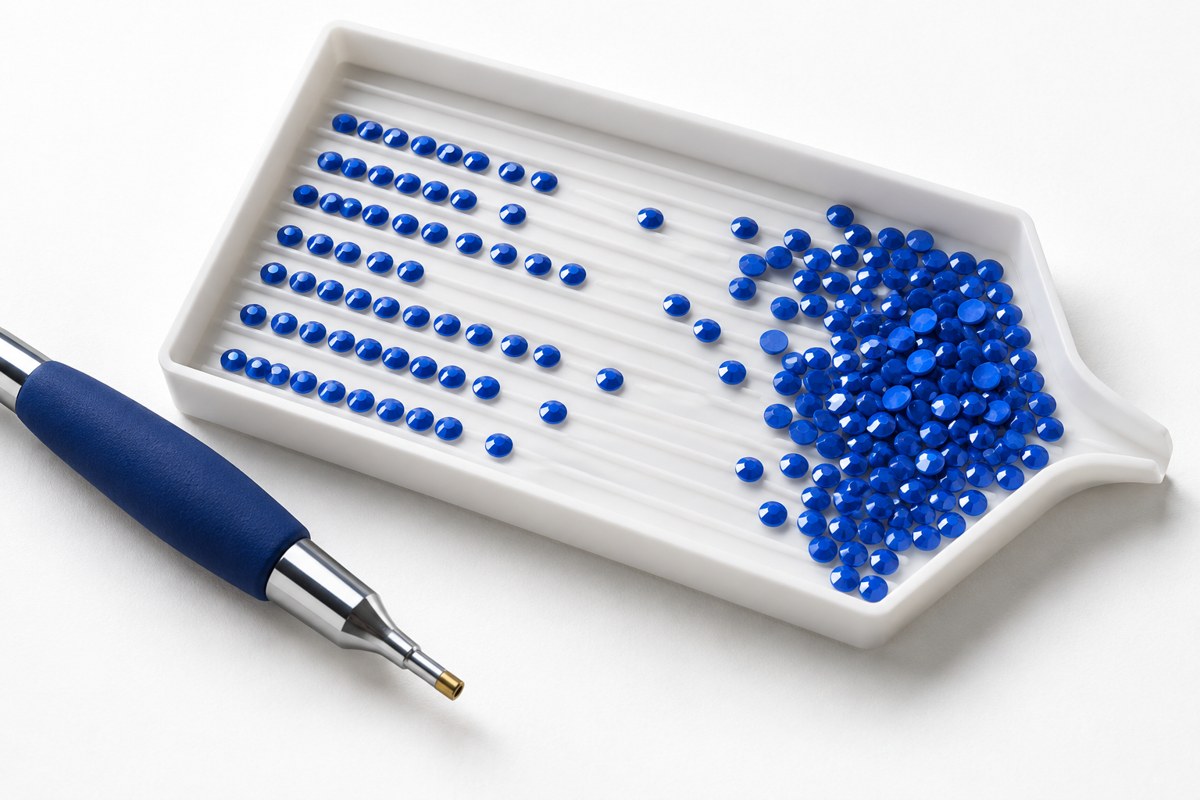
One observation. One next step.
Where do the drills get stuck?
Your next check
Compare a small sample.
Keep the full colour batch separate. Choose an observation to get a check for the bag, tray, pen or damaged drills.
Change one thing at a time so you can see which change helps.
This is a troubleshooting route, not a diagnosis or a measured comparison of products.
Schematic only. No physics simulation or measured tray capacity.
Make space between the drills
A pile is not proof of static.
Drills need space to drop between the ridges. Pour most of them back into a labelled pot, then tilt gently and tap the side. Watch the small sample rather than shaking harder.
If the same drills move freely in another clean, dry tray, inspect the first tray for residue, rough ridges or warped plastic. A surface problem needs a different fix from a charged bag.
Bag · tray · pen
Keep the test small and dry.
Charge can build when plastic materials rub together. But drills that refuse to move can also have residue, damaged edges or too little room. These comparisons help narrow it down.
Keep the colour code with every sample. The diamond painting storage container guide covers labelled pots and transfers.
-
Clinging inside the bag
Tap the outside over folded paper and move a small sample to a clean, dry rigid pot. Compare a second colour before treating the whole supply.
-
Catching in the tray
Reduce the load. If that fails, empty the tray, wash with a little ordinary dish soap, rinse well and dry completely. Test the same sample in a second tray.
-
Failing at the pen
Remove excess wax and dust from the tip. Try fresh wax in a single placer with light pressure. See the diamond painting pen and multiplacer guide for setup.
-
Fused or misshapen drills
Set them aside. Take a clear photo with the colour code and ask the kit supplier about replacement drills.
Leave the adhesive alone
Skip lotion on the drills.
Hand lotion, fabric softener, dryer sheets and household sprays can leave a film. A method that makes drills slide may still put residue on the surface that needs to stick to the canvas.
Clean hands are a better starting point.
If you have used lotion, let it absorb and wash and dry your hands before handling the drills. Keep sprays, mist and damp cloths away from exposed canvas adhesive and electrical light pads.
Do not keep adding remedies to a batch that already pours, settles and lifts cleanly. If the comparison keeps pointing to the tray, change the tray instead of coating the drills.
Drills still awkward to place?
Check the tool that touches them next.